
Vitalant is focused on building a stronger connection with the Hispanic community and increasing blood donation in a way that actually lasts over time. Across the research, the interest is already there: in the consumer survey, 50% of Hispanic respondents said they were very likely or somewhat likely to donate in the next 12 months, while 37.6% were unsure or somewhat unlikely, showing that the biggest opportunity is not changing people’s values, but helping them move past hesitation.
What came through early on, both in survey signals and in deeper conversations, is that hesitation plays a big role in people not wanting to continue to donate. It is not that people are against donating, it is that they are unsure about parts of the process. Questions around eligibility, health impact, privacy, convenience, and what really happens during donation create just enough doubt for people to pause and put it off.
This work focused on getting a real understanding of those feelings through 306 Hispanic survey respondents, 3 virtual focus groups, 1 English-speaking group, 2 Spanish-speaking groups, and a marketing audit across 6 social platforms, the website, donation journey, and Spanish appointment experience.
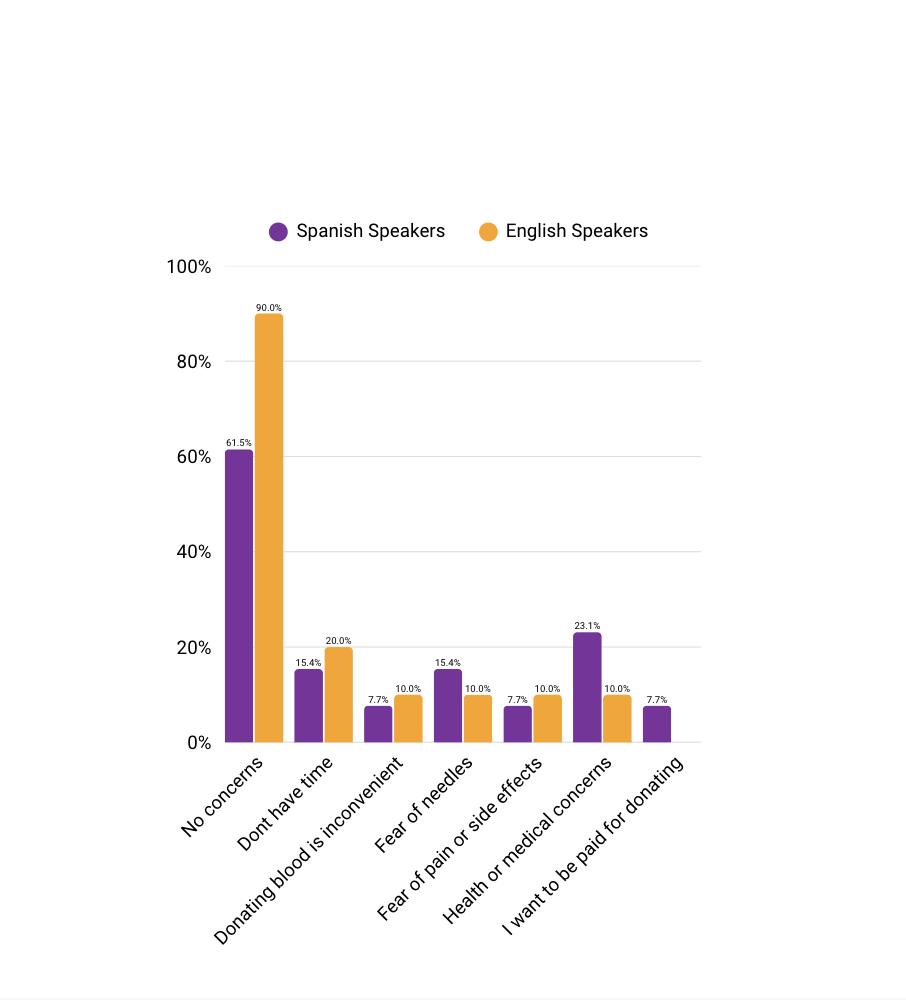
One of the clearest findings was that blood donation is emotional first. Hispanic participants often connected donation to real-life moments involving family, illness, or emergencies, showing that the motivation to help is already there. The bigger challenge is turning that motivation into action by reducing uncertainty and making the experience feel simple, safe, and convenient.
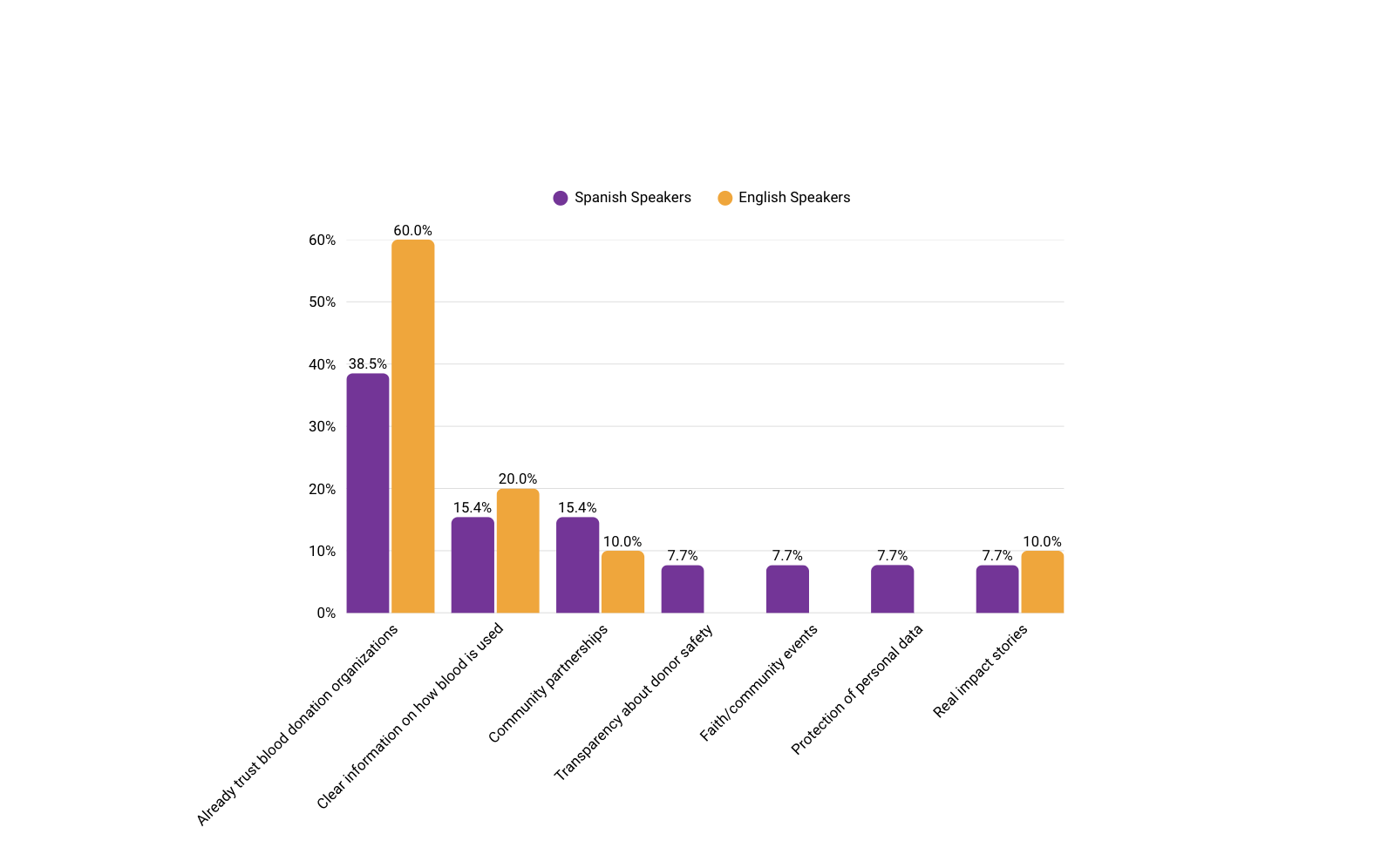
Convenience and clarity were major drivers. More convenient locations or times were important across donor groups, while 45.9% of Lapsed Donors said clearer eligibility information would make them more likely to donate. Trust also plays a major role, especially around safety, the donation process, and respectful treatment. Spanish-language communication helps reinforce that trust and credibility, with Spanish-language TV, social media, and radio remaining important sources of information.
The opportunity for Vitalant is to focus less on convincing people that donation matters and more on removing hesitation. Messaging should lead with real human impact, clearly explain safety and eligibility, use Spanish intentionally, and make the donation experience easy to understand and return to. Social media is especially important for younger audiences, reaching 48.7% of Gen Z and 50.5% of Millennials with blood donation information.
This work gave Vitalant a direct approach to engagement with the Hispanic community in a way that feels real and effective. The focus is not on convincing people that blood donation matters, because that belief is already there. The focus is on removing hesitation and building confidence in this experience of giving blood.
The direction coming out of this is to lead with real human impact instead of general messaging, be direct and transparent about the process, especially around safety and eligibility, use Spanish intentionally in the moments that matter most, and address concerns openly instead of avoiding them. It also means designing an experience that feels simple, respectful of people’s time, and easy to come back to.
The numbers support that direction. Social media is a key awareness channel, especially for younger audiences, with Gen Z at 48.7% and Millennials at 50.5% reporting exposure to blood donation information through social media. Word of mouth also matters, especially among Gen Z at 38.5% and Millennials at 38.6%, while healthcare facilities remain steady across generations at 33% to 37%.
Connecting Brands with Hard-to-Reach Audiences Through Data-Driven Insights & Culturally Relevant Content