
Our How and Why
Focus groups remain one of the most powerful tools in qualitative research. When done well, they uncover not just what people think, but why they think it. At Nativa, we treat focus groups as carefully designed systems that can make real changes and generate hard-to-find insights. Our approach is built on structure, intentionality, and precision at every stage, from planning and recruitment to moderation and analysis.
 Starting with Clear Objectives
Every successful focus group begins with clarity. Before anything is designed, we define what the research needs to achieve and how we will frame questions to ultimately gather the most relevant and actionable insights.
This includes:
- What decisions the insights will support
- Which audiences need to be represented
- What level of detail is actually useful
- How findings will ultimately be used
This step ensures the focus group is not overloaded with unnecessary questions or unfocused discussion. A strong focus group answers specific questions well, rather than trying to answer everything at once.
Thoughtful Moderator Selection
Rafael Amezcua leads Nativa’s focus group moderation and plays a big role in the quality of the conversations. As a native Spanish speaker from Guanajuato, Mexico with a background in marketing and consumer research, Rafael understands how to create a space where participants feel comfortable speaking openly, especially when the topics are personal or connected to culture, trust, or decision making.
What makes Rafael incredibly strong as a moderator is that he keeps the conversation feeling natural while still knowing where it needs to go. He can let participants speak freely, but he also knows when to ask a follow-up question, bring someone 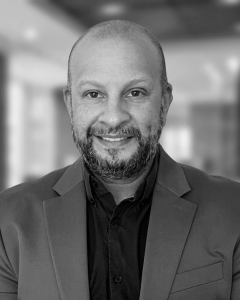 back into the conversation, or guide the group to a new key topic.
His style helps people feel heard without making the session feel too formal or forced. That balance is important because the best insights often come from the moments when participants explain something in their own words. Rafael helps Nativa get to those moments while keeping the discussion focused and useful for the research.
Designing the Discussion Guide
The discussion guide is the backbone of the session. It helps create structure within the conversations and derive the most accurate and natural insights possible.
We design to Discussion Guide to:
- Follow a natural conversational flow
- Move from general topics to deeper exploration
- Avoid leading or biased phrasing
- Stay tightly aligned with research objectives
Rather than treating it as a strict script, we build it as a flexible framework that allows moderators to adapt based on how the conversation unfolds. This helps capture more authentic and unexpected insights while still staying focused on the main purpose of each focus group.
Recruiting the Right Participants
The quality of a focus group depends heavily on who is in the room. We prioritize participants who:
- Accurately represent the target audience
- Reflect relevant behaviors or experiences
- Are comfortable speaking in group settings
- Are not overly experienced in research participation
Recruitment is not just about filling seats it’s about ensuring each participant brings a meaningful perspective to the discussion.
Screening for Quality and Relevance
Strong recruitment is supported by rigorous screening. Our screening process typically includes:
- Structured qualification questionnaires
- Behavioral and attitudinal checks
- Technology checks via Zoom call to make sure all participants can use the tech necessary to participate
- Consistency validation across responses
- Filtering out professional or repeat respondents when necessary
This ensures that insights are grounded in real, relevant experiences rather than rehearsed or unreliable responses.
Turning Conversations into Insight
Once the session is complete, we move from dialogue to analysis. We identify:
- Key recurring themes
- Differences across participant segments
- Gaps between stated attitudes and actual behaviors
- Supporting quotes that bring insights to life
The final output is structured to be directly usable for decision making, not just informational.
Client Work: Desert Financial Credit Union (DFCU) & Vitalant Blood Donation Research
In our work with Desert Financial Credit Union (DFCU) and Vitalant Blood Donation, the focus was on understanding real motivations with the Hispanic communities behind two very different but equally behavior driven decisions, financial engagement and blood donation.
 For DFCU, the research explored Hispanic member perceptions, financial behaviors, and the emotional drivers that influence trust in a credit union versus traditional banking institutions. Focus groups were central in uncovering how members naturally describe value, convenience, and financial confidence in their own words providing insights that are often difficult to capture through structured surveys alone.
For Vitalant, the research focused on donor attitudes, barriers to giving blood, and the factors that encourage repeat participation. Conversations helped surface both emotional and practical considerations, such as personal motivation, awareness of need, scheduling convenience, and how donors perceive the impact of their individual contrib ution.
Across both studies, a key goal was identifying the gap between intention and action what people say they care about versus what actually drives them to participate or engage. By combining qualitative insights with broader behavioral context, the research delivered clear, actionable direction for improving communication strategies and strengthening engagement.
Ultimately, both projects highlighted the same core insight: whether it’s financial decision making or community health participation, understanding human motivation at a deeper level is what leads to more effective messaging, better experiences, and stronger long-term engagement.
Final Thoughts
At Nativa, focus groups are designed with intention at every step. From who we recruit to how we analyze results, every decision is made to ensure the insights we deliver are meaningful, reliable, and actionable. Because in the end, the goal is not just to run a focus group, it’s to uncover the human insight that drives better decision making and can make a real impact on marketing strategies.