AI can translate your Spanish marketing in seconds. But can it translate well?
With so many AI and translation tools available today, it can be hard to know which one is actually right for your brand. Should you use DeepL? ChatGPT? Claude? Google Translate? And what happens when your marketing needs to sound natural, stay true to your brand, and get the details exactly right?
We wanted to find out.
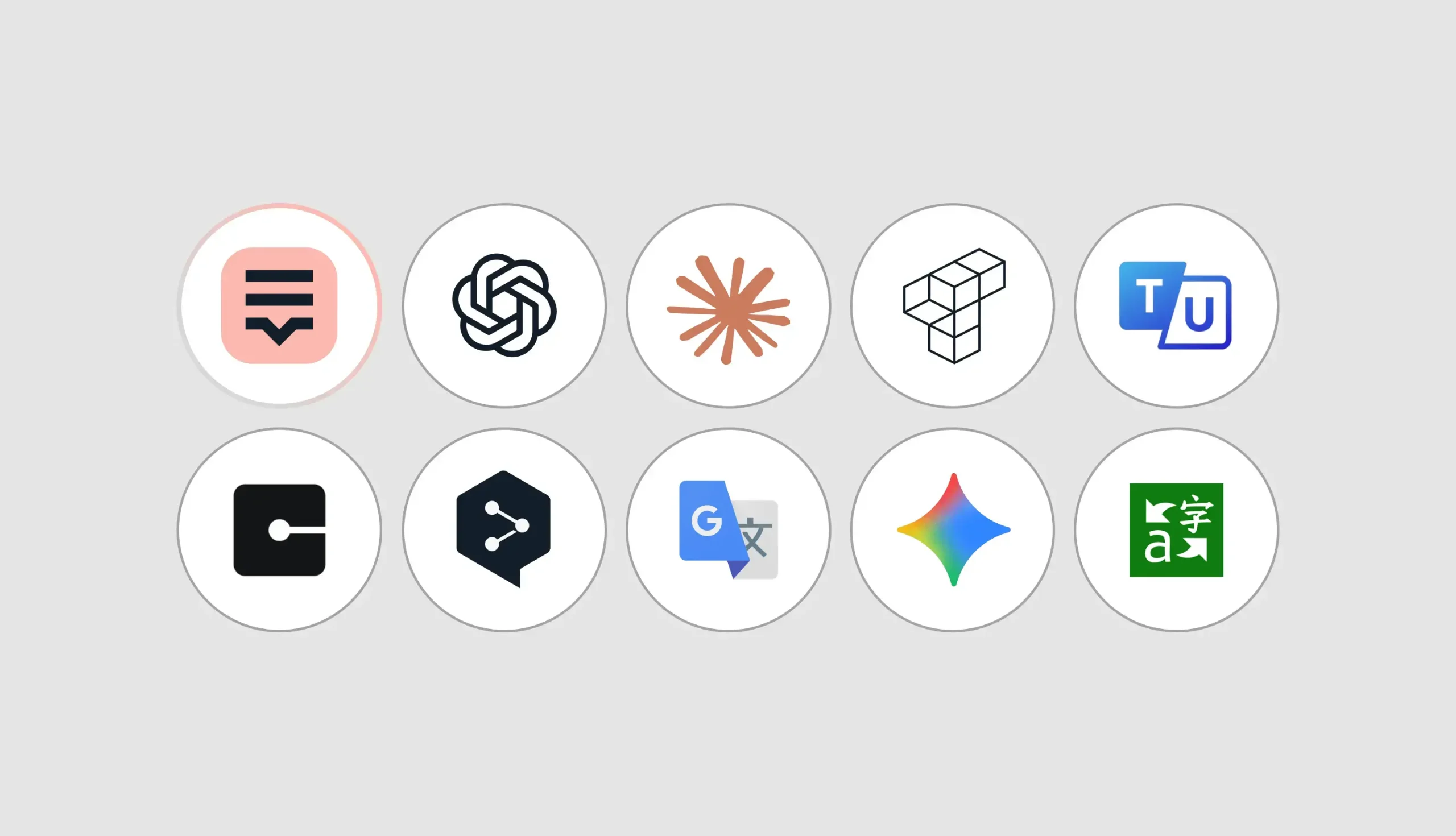
For a recent healthcare marketing project, we tested seven popular AI and translation platforms to see how they handled Spanish language marketing. Instead of simply asking which tool gave us the “best” translation, we created a repeatable process for figuring out which tools work best for different types of content.
Here are the 5 steps we used to put AI translators to the test.
1. Start With the Original, Not Just the Translation
Before asking AI to translate anything, you need to know exactly what you want it to accomplish. We tested several different marketing paragraphs, including copy where accuracy was the top priority and copy where tone, emotion, and creativity mattered more.
For every test, we gave the platforms the same source material and the same basic instructions, including:
- Who the audience was
- What the brand needed to communicate
- The purpose of the content
- The desired tone
- Important terminology
- Information that could not be changed
This helped us make a fair comparison. Every platform started with the same information and the same expectations.
2. Give Every Translation a Simple Pass/Fail Test
This was one of the most important parts of our process. Before we scored anything, every translation had to pass a factual test. And this test was simple: Pass or Fail. Nothing in between. If a translation changed, removed, or added important information, it failed.
We specifically looked at things like:
- Facts and numbers
- Important qualifiers like “may,” “likely,” or “up to”
- Brand-specific terminology
- Differences between actions
- Claims
- Calls to action
- Any other information that needed to stay exactly aligned with the original
Why be so strict?
Because a translation can sound amazing and still be wrong. In healthcare marketing especially, a polished sentence doesn’t make up for a changed fact or missing qualifier. If the meaning is wrong, the translation doesn’t move on to the next round. It fails.
3. Then Score What Makes the Spanish Sound Good
Once a translation passed the factual test, we could actually evaluate the writing. We scored each eligible translation out of 100 points across five areas:
| Evaluation Criterion | Weight | Why It Matters |
| Fidelity & Coverage | 30 | Measures whether the translation preserves the source meaning, key facts, qualifiers, and required information. |
| Naturalness of Spanish | 25 | Evaluates whether the copy sounds written for Spanish-speaking audiences rather than translated word-for-word. |
| Brand Voice & Tone | 20 | Assesses whether the output preserves the intended personality, emotional tone, and communication style. |
| Cultural Fit | 15 | Measures whether wording and references feel appropriate and broadly understandable for U.S. Hispanic audiences. |
| Clarity & Persuasive Effect | 10 | Evaluates whether the message remains clear, compelling, and effective as marketing copy. |
| TOTAL | 100 |
We wanted to know:
Does it sound natural? Does it still sound like the brand? Woulda Spanish speaking audience actually connect with it? And does it still work as marketing?

That’s where the difference between translation and transcreation becomes important. Translation focuses on accurately transferring the original meaning. Transcreation gives the writer more freedom to adapt language, emotion, tone, and persuasive messaging so the idea works naturally in another language. For marketing, that distinction matters. A word for word translation isn’t always the best marketing copy.
4. Look at the Results, But Don’t Place One Permanent Winner
So, which AI platform came out on top? Well, it’s a little more complicated than that. In our project sample, DeepL scored 88/100 and Claude scored 86/100. Because the difference was less than three points, we treated the results as an operational tie rather than pretending that a two point difference meant one tool was automatically better. Instead, we looked at what each platform did best.
 DeepL was particularly strong when accuracy and coverage were the priority. Claude stood out as a useful option for transcreation, especially when the goal was to adapt tone and marketing intent more creatively. ChatGPT, Gemini, and Copilot also produced strong stylistic results in our sample. However, each had an output that left out a protected detail in one of the test passages. Because of our Pass/Fail guide, those specific outputs were removed from the ranking.
That doesn’t mean those platforms will always make the same mistake. It shows why checking the facts first matters more than how polished the translation sounds. Google Translate was helpful as a literal baseline, while Grammarly was more useful as a post editing tool than as our primary translation platform. And one important reminder: these results are based on our project sample, not a forever ranking of AI platforms. AI tools change quickly, and their outputs can change from one prompt to the next.
5. Don’t Let AI Have the Final Word
The best AI translation workflow isn’t necessarily about finding one “perfect” tool. Different tools can be useful for different parts of the process. One might be better for a first translation. Another might be better for creative transcreation. Another might be useful for comparing a literal translation or polishing the final copy. Our recommended workflow looks something like this:
Brief → Protect → Generate → Test → Score → Review
Brief the task: Give the AI the audience, objective, channel, tone, and desired action.
Protect the important stuff: Identify the facts, numbers, qualifiers, claims, and brand terms that cannot change.
Generate: Create your first version using the platform that best fits the task.
Test: Run the Spanish against the original. If important information changed, was added, or was removed, it’s a Fail.
Score: If it passes, evaluate the things that make the copy effective such as naturalness, brand voice, cultural fit, clarity, and persuasive effect.
Review: Have a bilingual human review the final version before it goes live. And don’t forget to save your work. Keeping the original source, prompts, AI outputs, edits, scores, and final version makes it much easier to repeat the process later.
Why This Matters for Hispanic Marketing
Spanish language marketing isn’t simply about swapping English words for Spanish ones. U.S. Hispanic audiences are diverse, and what sounds natural to one audience may not work the same way for another. Regional language preferences, cultural references, tone, and context all play a role. That’s why a translation can be technically correct and still miss the end goal. For a healthcare brand, accuracy may be the biggest priority. For a lifestyle brand, tone and creativity might carry more weight. The scoring can change depending on the industry and the campaign, but one thing shouldn’t. Accuracy comes first. Once the facts are right, you can focus on making the message sound natural, culturally relevant, and genuinely engaging.
So, Which AI Translator Is Best?
The short answer? It depends on what you’re trying to do. Our testing showed that DeepL and Claude were strong performers for different reasons, but the bigger lesson wasn’t about picking a single winner. It was about creating a process that helps marketers make better decisions. AI can make Spanish language marketing faster and easier, but it shouldn’t replace human judgment. The strongest results come from combining the speed of AI with clear guidelines, careful fact checking, cultural understanding, and bilingual human review. Because when it comes to multicultural marketing, sounding right is only half the job. You have to be right, too.